Hybrid policy recommender
Shape a hybrid policy around your culture, office capacity, and actual attendance.
Prompt
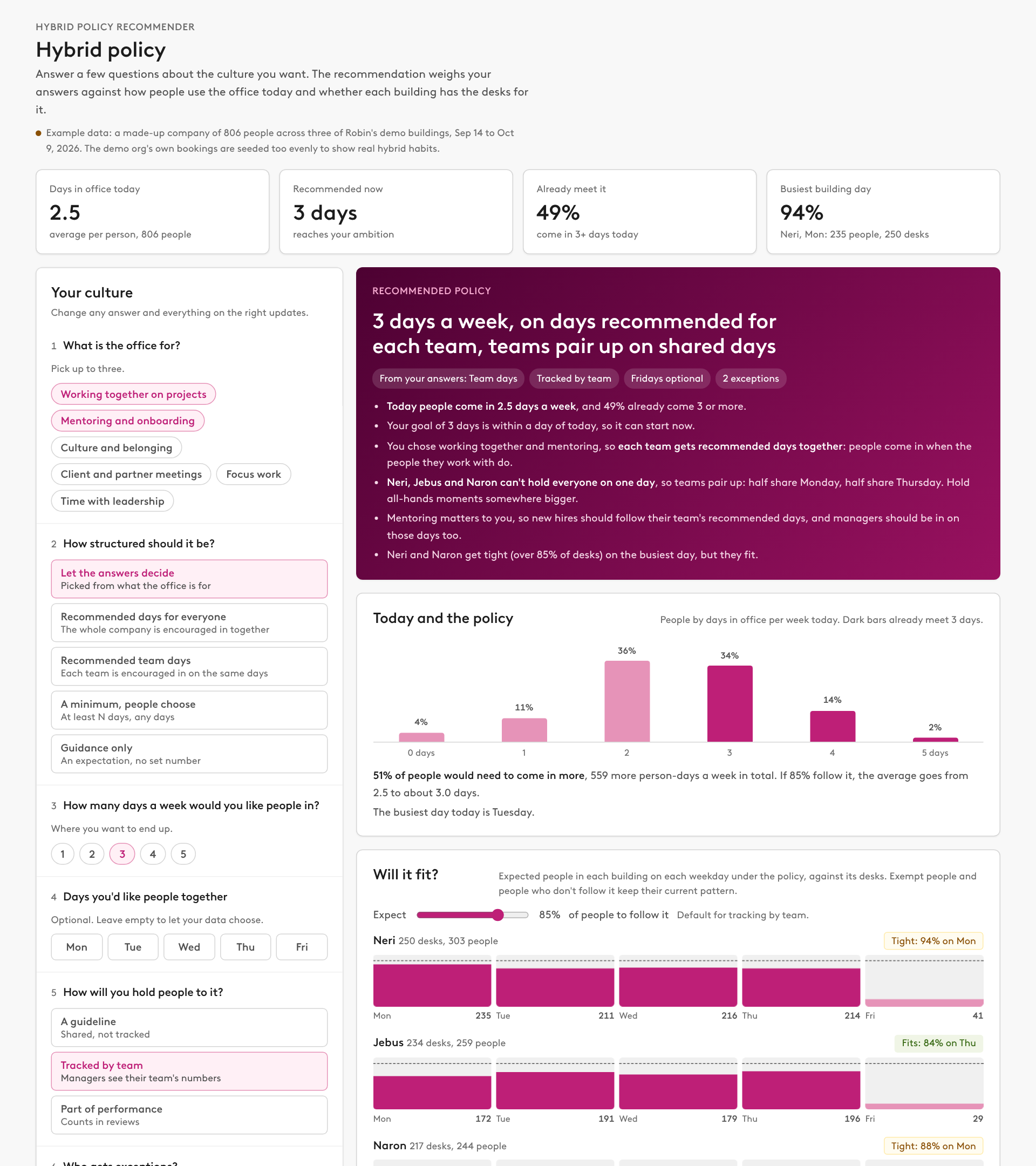
Using the Robin connector, build a hybrid policy recommender for [BUILDINGS] and publish it as an artifact using our design system. Only read from Robin. The page asks about the culture we want and recommends a policy that is realistic for how people use the office today.

Pull the data ([WINDOW], weekdays only)
1. For each building: workspace desks by type from the building overview, leaving out parking, lockers, labs and test floors.
2. Days in office per person: desk check-in days grouped by department and person, divided by the weeks in the window. Keep only a histogram per department and building (people at 0, 1, 2, 3, 4 and 5 days); never store or show names. Count people who booked but never checked in as 0. If a building has no check-ins at all, use booked days instead and say so.
3. Weekday pattern: desks used per day grouped by department and weekday, leaving out bulk-booking days (more than double the median and at least 20 desks above it).
4. Tell me about anything odd, such as the same people booking several desks a day or booking in many buildings at once.

Questions on the page (each answer updates everything)
1. What the office is for, up to three: working together, mentoring and onboarding, culture and belonging, client meetings, focus work, time with leadership.
2. How structured: let the answers decide (default), recommended days for everyone, recommended team days, a minimum with free choice, or guidance only.
3. How many days you'd like in the end (1 to 5).
4. Days you'd like people together (optional).
5. How you'll hold people to it: a guideline, tracked by team, or part of performance.
6. Exceptions: remote-hired roles, caregivers, long commutes, field and client roles.
7. Fridays: optional, like any day, or light with no recommended days.
8. If a building gets too full: stagger teams, free up desks, or accept tight days.

How to recommend
- What the office is for drives the policy, not just the wording. When the structure is left to the answers: working together and mentoring point to recommended team days, time with leadership to recommended days for everyone, culture to both, and focus work or client meetings to a minimum people choose. Ties go to recommended team days.
- Recommended versus open days: focus work caps recommended days at two, client meetings turns one recommended day into a day people choose, and working together or mentoring keeps at least two recommended days.
- Mentoring encourages new hires and their managers to come in on the team's recommended days; time with leadership puts leaders in on the shared days.
- Policy days now: your goal, capped at today's average plus one day, rounded down. If that's below the goal, plan one more day each quarter.
- The policy is a number of days a week. Days for everyone or for each team are recommendations, not rules: Robin's hybrid policy tracks how many days people check in, not which days. Say so on the page and in the draft.
- Recommended days: the days you picked, otherwise the days people already choose most. For recommended team days, when working together, culture or leadership is chosen, give every team a shared day the building can hold (preferred days first, then the quietest days). If no single day fits everyone, pair teams into two groups with their own shared day and say why. Spread the other recommended team days so each building's busiest day fits its desks.
- Expect 65%, 85% or 95% of people to follow it (guideline, tracked, performance), 50% for guidance only, with a slider to change it. Exempt people and people who don't follow it keep today's pattern.
- Capacity: expected people per weekday per building against desks. Over 85% is tight, over 100% doesn't fit. Say what to do based on the overflow answer.

Build the page
- Four tiles: days in office today, recommended days a week now, share who already meet it, and the busiest building day against its desks.
- The questions on the left; on the right the recommendation with the reasons behind it, today's spread of days per person against the policy, the capacity check by building and weekday, recommended team days per building, a rollout plan (agree it with leadership and HR, pilot six weeks in the building with the most room, turn it on in Robin, review, step up), and the policy draft.
- Policy draft sections: why we come together, what we expect (a number of days, with recommended days), how it will change, Fridays, new team members, exceptions, booking and checking in, how we'll measure it, and review. "Copy doc prompt" asks Claude to make it a Claude doc for HR review; "Copy policy text" copies the text.
- Robin setup steps: Manage, Hybrid Work Policies, Default Policy; set a minimum number of days per week; put the recommended days in the message; turn it on; export the monthly check-in report. Say that Robin holds one policy for the whole organization and tracks the number of days, so recommended days go in the message and team calendars.

Rules
- Report teams, never individuals. Note that the approved policy and exceptions belong in the HR system.
- Say which basis days per week come from (check-ins or bookings) and that bookings include no-shows.